Six Episodes and a Funeral: The Celebrity Podcast Epidemic Nobody Warned Us About
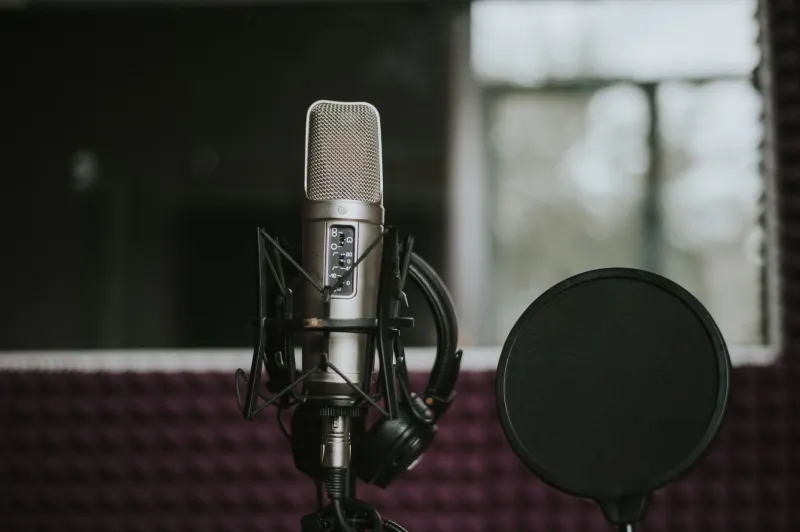
Somewhere in a storage unit in Burbank, there is a $400 microphone that has recorded exactly four episodes of a podcast called something like Unfiltered with [Insert Name Here]. Episode one: a rambling introduction about "finally having a space to be real." Episode two: a friend who is also famous. Episode three: a slightly less famous friend. Episode four: an episode that ends mid-sentence because the celebrity got a brand deal that required their full attention. The podcast has 11,000 subscribers and has not uploaded since March 2022.
This is not a hypothetical. This is Tuesday.
The celebrity podcast boom has quietly become one of the most reliable punchlines in entertainment — a space where ambition meets zero accountability and the result is a digital graveyard of RSS feeds that nobody bothered to delete. Let's talk about it.
The Barrier Is a Speed Bump, Not a Wall
Here's the honest problem: starting a podcast is genuinely, almost insultingly easy. You need a microphone, a free Spotify for Podcasters account, and something to say. Two of those three things are accessible to literally anyone. The third one — having something to say — is where celebrities, bafflingly, keep running into trouble.
For a regular person, starting a podcast takes effort. For a celebrity, it takes a Tuesday afternoon and a publicist who frames it as "building a direct connection with your audience." The low barrier to entry is precisely why the dropout rate is catastrophic. When something costs you almost nothing to start, it costs you almost nothing to abandon.
Podcast producers who've worked with celebrity clients describe a pattern so consistent it might as well be a template. Phase one: enormous enthusiasm, talk of multi-season arcs, big guest lists, a whole "vision." Phase two: the realization that a podcast requires showing up every week, prepared, with energy, regardless of whether you feel like it. Phase three: a hiatus announced as "taking a little break to recharge." Phase four: silence. Forever.
"The ones who flame out fastest are usually the ones who think the audience will just... appear," one audio producer said. "Like, they have Instagram followers, so they assume those people will migrate. But podcast listeners are a completely different relationship. You have to earn that time in someone's earbuds."
A Brief, Loving Eulogy for Pods We Barely Knew
The celebrity podcast graveyard has some truly iconic headstones. There was the actor who launched a true crime pod, released two episodes about a case they clearly Googled the night before, then pivoted to a wellness brand. There was the musician who promised "deep conversations about creativity" and delivered three interviews that felt like press junkets for projects they were promoting at the time. There was the reality TV star whose podcast lasted exactly as long as their PR contract.
Honorable mention goes to every celebrity who announced a podcast during the pandemic, recorded in their closet surrounded by coats for acoustic purposes, and treated the whole enterprise like a quarantine hobby project that expired when restaurants reopened.
The funniest part? Many of these abandoned shows still live online. You can find them right now — frozen mid-season, episode descriptions full of promises about "incredible guests coming up" — monuments to the gap between celebrity ambition and celebrity follow-through.
So Why Do the Good Ones Actually Work?
Here's where it gets interesting, because some celebrity podcasts are genuinely massive. We're talking years-long runs, loyal audiences, real cultural impact. And if you look at what separates the survivors from the graveyard residents, a pattern emerges that's almost annoyingly obvious.
The ones that work have a host who actually gives a damn about the format. Not about having a podcast as a concept — about this podcast, this conversation, this specific thing they want to explore. Conan O'Brien's podcast works because Conan is constitutionally incapable of being boring in a one-on-one conversation and genuinely seems delighted by the medium. Armchair Expert with Dax Shepard works because Shepard has done enough personal work to be genuinely curious about other people's psychology. SmartLess works because three guys who have been friends for decades are actually funny together, not just famous together.
The secret formula, infuriatingly, is: be interested in something beyond yourself, show up consistently, and treat the audience like they're smart. Revolutionary stuff.
The pods that fail are almost always the ones where the celebrity is the subject rather than the host — where every conversation circles back to their projects, their feelings, their perspective, with guests who are really just props. Audiences can smell the self-promotion from episode one. They just don't come back for episode two.
The Spotify Money Problem
It would be irresponsible not to mention the elephant in the room: the years when Spotify was throwing money at celebrities like it was a sport. During the platform's podcast acquisition frenzy, getting a celebrity deal wasn't about merit — it was about name recognition and the theoretical possibility of listener migration. This created a whole wave of podcasts that existed primarily as financial instruments rather than genuine creative projects.
When the checks stopped being quite so astronomical, a lot of celebrities discovered they'd never actually wanted to make a podcast. They'd wanted to make money from a podcast, which is a different thing entirely. The distinction matters, and the audience always figures it out.
What This Actually Says About Celebrity Culture
The podcast graveyard is funny, but it's also kind of revealing. It exposes the gap between how celebrities see themselves — as interesting, multi-dimensional people with things to say — and the reality that fame doesn't automatically generate insight or discipline.
A podcast demands something that most celebrity careers actively train people out of: consistency without immediate reward, vulnerability without a PR filter, and genuine engagement with someone else's ideas. The celebrities who've built lasting podcasts are almost universally the ones who treat it like a craft, not a platform extension.
For everyone else, there's always a microphone in a storage unit, waiting patiently for an episode five that will never come.
Rest in peace, Unfiltered with [Insert Name Here]. You deserved better. You deserved, at minimum, a proper series finale.