You Cried Over Someone Who Doesn't Know Your Name and That's Completely Valid (But Also Very Weird)
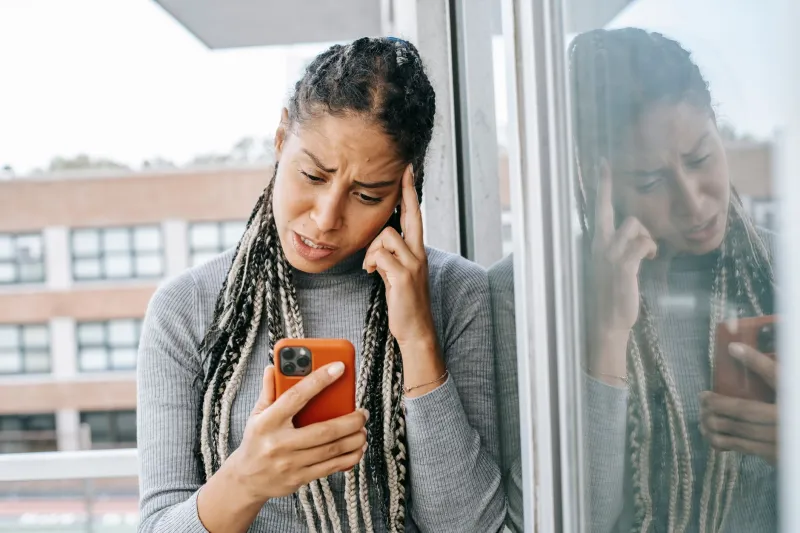
Let's set the scene. You're scrolling through your phone on a perfectly normal Tuesday when the news hits. Your favorite celebrity — the one whose interviews you've watched approximately forty-seven times, whose podcast plays in your ears during every commute, whose aesthetic has quietly influenced your entire apartment decor — has done something that changes everything. Maybe they got canceled. Maybe they said something unforgivable. Maybe they just… sold out in a way that felt like a personal betrayal.
And you feel it. In your chest. Like a breakup.
Before your brain catches up, your body is already in grief mode. Which is genuinely confusing because — and this is the key detail — this person does not know you exist.
Welcome to the Parasocial Breakup, Population: Millions
Psychologists have been studying parasocial relationships since the 1950s, when researchers Donald Horton and Richard Wohl first noticed that TV audiences were developing weirdly intimate feelings toward people on screen. But the phenomenon has absolutely exploded in the social media era, where the illusion of access is so sophisticated that the line between "person I follow" and "person I know" gets genuinely blurry.
A celebrity who posts daily Instagram Stories about their morning routine, their relationship struggles, their therapy breakthroughs, their dog's weird personality quirks — they are, whether intentionally or not, building a relationship with you. Or at least a very convincing simulation of one. Your brain, which evolved long before the internet existed and has no real framework for distinguishing between "person I interact with regularly" and "person I watch interact with a camera," files them under: someone I know.
So when that person disappoints you? Your brain processes it like a real loss. Because in the only way your nervous system understands, it kind of is.
The Betrayal Hits Different When You Invested That Much
Here's what makes parasocial grief particularly brutal: the investment is almost entirely one-sided, but it rarely feels that way. When you've spent years listening to someone's podcast, absorbing their worldview, letting their aesthetic influence your taste, defending them in arguments with people who didn't get it — you have genuinely put something of yourself into that relationship. The fact that the other party has no idea doesn't make your investment less real.
This is why cancellations hit fan communities like actual tragedies. It's not just disappointment in someone's behavior — it's the sudden, disorienting collapse of a version of a person you'd built in your own mind. The podcaster who turned out to have been lying about their life story. The actress whose political opinions revealed a worldview you can't reconcile with the roles you loved. The musician who, it turns out, was doing something genuinely terrible the whole time.
The grief isn't just for the celebrity. It's for the version of them that existed in your head, and for the version of yourself that loved that version of them. That's a real loss, and dismissing it as silly or embarrassing doesn't make it go away.
The "I Never Even Met Them" Spiral Is Its Own Special Torture
What makes parasocial grief uniquely painful is the shame spiral it tends to trigger. You feel devastated, and then immediately embarrassed about feeling devastated, and then you feel defensive about being embarrassed, and somewhere in that loop you've spent three hours on a fan forum at 2 a.m. reading think-pieces about whether the celebrity in question is actually redeemable.
The "but I never even met them" logic sounds like it should short-circuit the grief, but it doesn't, because grief doesn't run on logic. You can know, intellectually, that your attachment was one-directional and that the celebrity would not lose a single night of sleep over your disappointment, while also feeling genuinely gutted. Both things are true simultaneously, and the cognitive dissonance is its own specific kind of exhausting.
Therapists who work with younger clients report that parasocial grief is increasingly showing up in sessions as a genuine presenting issue — not as a quirky sidebar, but as real emotional distress that needs real processing. The fact that we've collectively been slow to take it seriously says more about our discomfort with modern intimacy than it does about the validity of the feeling.
What This Actually Says About Connection in 2025
Zoom out for a second, because the parasocial grief phenomenon is pointing at something bigger than celebrity fandom. It's revealing how desperately human beings want connection, and how creatively we'll construct it when the real thing feels scarce or risky.
Parasocial relationships are, in many ways, the perfect low-risk intimacy. The celebrity can't reject you, can't be in a bad mood that ruins your day, can't make demands on your time or energy. You get the warm feeling of knowing someone without the vulnerability of being known back. For a generation that grew up being told that emotional openness was dangerous and that the internet was the safest place to live, that's not a bug — it's a feature.
The grief, when it comes, is the moment the safety net reveals itself as a mirage. And that particular flavor of disillusionment — discovering that something you built your emotional life around was always more fragile than it felt — isn't unique to celebrity culture. It's just celebrity culture that makes it visible.
So How Do You Actually Get Through It?
First: let yourself feel it without performing shame about it. The "it's just a celebrity" dismissal isn't helpful and it isn't accurate. Your feelings are a real response to a real (if asymmetrical) relationship ending.
Second: try to identify what the parasocial relationship was actually giving you. Community? Inspiration? A sense of identity? Understanding the function helps you figure out where to redirect that energy.
Third: maybe — gently, without judgment — consider whether the portfolio of people you've built your emotional life around includes some who actually know your name. Not to replace the parasocial stuff, but to make sure you're not exclusively farming intimacy from people who are, at the end of the day, just very compelling content.
Your grief is valid. Your attachment made sense. And you're going to be fine — even if it takes a little while, and even if you have to do a full digital detox first.
We've all been there. We're all still there, a little bit. That's just what it means to be human and extremely online simultaneously.